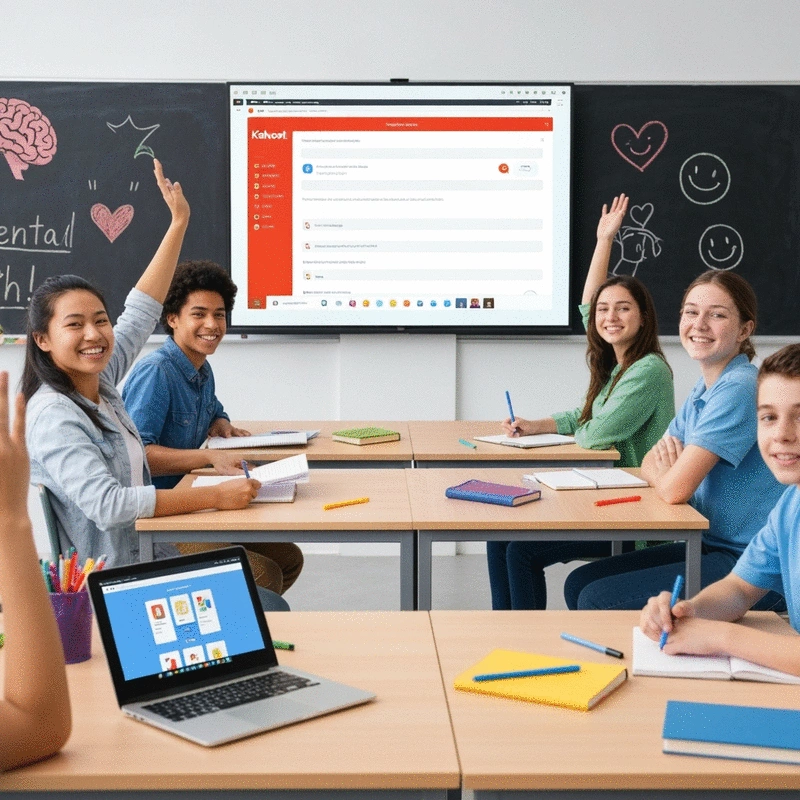
Familiarize Yourself with Kahoot!
Explore the platform and its features to understand its capabilities for mental health education.
Step 1
In a world where mental health challenges are increasingly prevalent, educators are seeking innovative ways to foster awareness and support among students. Kahoot! emerges as a powerful tool, transforming the educational landscape into an interactive platform that not only engages students but also opens vital discussions about mental health.
The following visual outlines key steps for educators to integrate Kahoot! effectively in promoting mental health awareness and fostering a supportive learning environment.
Explore the platform and its features to understand its capabilities for mental health education.
Create quizzes covering essential mental health topics like anxiety management and coping strategies.
Use quizzes as starting points for deeper conversations on mental health in your classroom.
Ask students for their opinions after implementation and adjust your approach as needed for continuous improvement.
In today's fast-paced educational landscape, integrating tools that promote mental health awareness is essential. Kahoot! is one such platform that has rapidly gained popularity as a fun and engaging way to facilitate learning. In this section, we'll explore how Kahoot! can be leveraged to enhance mental health awareness among students, making it a valuable resource in educational settings.
Kahoot! is an interactive learning platform that allows educators to create quizzes, surveys, and discussions. It transforms traditional learning into an engaging experience through gamification. Users can answer questions in real-time, which not only makes learning enjoyable but also fosters a collaborative atmosphere.
This platform is particularly effective in raising awareness about mental health topics. By using Kahoot! for mental health education, we can create an environment where students feel safe to explore and discuss important issues. The interactive nature of Kahoot! encourages participation, making students more likely to engage with topics they might otherwise find daunting.
The intersection of mental health and education is increasingly recognized as vital for student well-being. With mental health challenges on the rise among young people, it's crucial to incorporate resources like Kahoot! to address these issues head-on. Findings published in the National Library of Medicine highlight the growing need for interventions that support adolescent mental health, emphasizing the role of educational settings. By focusing on educational practices that promote mental well-being, we can help students develop the skills they need to succeed both academically and emotionally.
When we incorporate mental health discussions into our curriculum, we are not just teaching content; we are nurturing future generations to be more empathetic and resilient. This is where Kahoot! shines!
Social Emotional Learning (SEL) is critical for helping students manage their emotions, establish positive relationships, and make responsible decisions. It lays the foundation for mental well-being and academic success. Integrating SEL into our educational practices, particularly through platforms like Kahoot!, enables a holistic approach to learning.
By focusing on these aspects, we empower students to embark on a journey of self-discovery and emotional growth, laying the groundwork for a healthier future. The National Library of Medicine further underscores the profound impact of social-emotional skills on overall mental health.
Using Kahoot! to teach SEL concepts can be both fun and effective. Educators can create quizzes that cover various SEL components, facilitating discussions on emotional intelligence, conflict resolution, and stress management. This interactive learning experience not only engages students but also reinforces their understanding of essential mental health topics. Kahoot! also partners with initiatives like Microsoft Reflect to further integrate SEL into learning experiences, as detailed on the Kahoot! blog.
Moreover, by allowing students to express their thoughts and feelings through Kahoot! quizzes, we create a platform for open dialogue about mental health. This can lead to increased awareness and understanding among peers, creating a supportive community.
One of the standout features of Kahoot! is its ability to enhance emotional intelligence through gamified learning. By incorporating questions that focus on emotional scenarios, students can practice identifying and understanding various feelings.
This approach not only boosts emotional awareness but also helps students develop coping strategies for dealing with life's challenges. It’s all about creating a safe space where students can explore their emotions while having fun!
Have you ever used Kahoot! for mental health education? We’d love to know how it worked for you! Share your thoughts or experiences in the space below:
As we explore the intersection of technology and mental health education, it's clear that tools like Kahoot! can play a pivotal role in enhancing student well-being. By fostering interactive learning environments, we can significantly improve mental health awareness in classrooms. At Memory Upgrades, I believe in the importance of equipping students with the knowledge and resources to navigate their emotional landscapes effectively.
Now that we've discussed the benefits, it’s time to consider how to implement Kahoot! effectively in your educational settings. The steps for integrating this tool into your curriculum are straightforward, and the rewards are plentiful!
For educators looking to make a difference, embracing Kahoot! as a platform for mental health education can be a game changer. Here are some next steps for implementation:
By taking these steps, educators can foster a supportive atmosphere where mental health discussions are normalized and encouraged, helping students feel more comfortable in sharing their experiences.
Implementing Kahoot! goes beyond just the classroom! Consider extending the engagement to:
These initiatives not only enhance learning but also create a holistic support system for mental health awareness!
To further enhance your journey with Kahoot! and mental health education, consider utilizing some of the following resources:
These resources can provide invaluable insights and strategies for implementing effective mental health education in your classrooms.
I encourage you to be part of the growing conversation about mental health in education. Sharing your experiences can help break the stigma and create a community of support!
Have you used Kahoot! in your classroom? I would love to hear your stories! Sharing successes and challenges not only helps us learn from one another but also inspires new ways to approach mental health education.
Let’s work together to promote mental health awareness! By engaging with your community—whether online through social media or in-person—we can create a culture that prioritizes mental well-being. Whether it’s through workshops or casual meet-ups, every bit of conversation counts!
As we wrap up, remember that promoting mental health is a collective effort. Together, through tools like Kahoot!, we can pave the way for healthier minds and a brighter future for our students.
Here is a quick recap of the important points discussed in the article:
Founded by Michael Kaswatuka, Memory Upgrades emerged from a deep-seated belief in the transformative power of cognitive enhancement. Michael's journey began with a personal passion for unlocking human potential through memory improvement. With years of experience in cognitive training and brain health, Michael combines research-backed strategies with practical tips to empower our readers to enhance their memory and cognitive skills effectively.
At Memory Upgrades, our mission is to empower individuals to enhance their memory and cognitive skills through effective techniques and personalized strategies. We are committed to fostering a community where knowledge, support, and innovation converge to promote optimal brain function and lifelong cognitive health.